
A space heater can have plenty of room at noon and be crowded by evening. The recliner opens, a blanket slips off the sofa, curtains close, and a charging cable crosses the floor. The location did not change, but its surroundings did. That is why heater placement has to account for a room in use, not just a tidy room before anyone sits down.
This advice concerns portable electric room heaters. Fuel-burning heaters have additional combustion and ventilation requirements, and outdoor heaters do not belong inside. For an electric model, the first decision is whether the room offers a suitable outlet, floor position, clearance, and awake supervision at the same time. If one is missing, choose another location or another heating arrangement.
Start at the wall outlet, then look for floor space
An empty corner across the room is not a workable heater location if reaching it requires an extension cord. CPSC's winter heating safety guidance says to plug electric space heaters directly into wall outlets, never extension cords or power strips. A surge protector does not change that rule.
Find an outlet the heater's own cord can reach without stretching. The plug should fit firmly, not sag or fall partly out. Do not use an adapter to defeat a grounding pin, and do not add a plug-in splitter to make space. A loose receptacle needs an electrician, not something wedged beneath the plug.
The cord must remain visible and protected from damage. Do not run it beneath a rug, pinch it under furniture, trap it in a door, or route it across a walking path. If hiding the cord is the only way to make the location livable, the location is wrong. Move furniture or abandon that spot.
Consider what else uses the circuit. Two outlets on different walls may still share it. Washington State Patrol's heating and space heater safety advice recommends avoiding other devices on the same outlet or circuit. If you cannot establish a suitable arrangement without opening electrical equipment, ask a licensed electrician to assess it.
Measure the clearance from the heater, not its warm-air stream
CPSC's portable electric heater safety sheet specifies at least three feet between combustible materials and the heater's front, sides, and rear. Do not measure only in the direction the fan blows. Follow the model's instructions wherever they require more distance or additional overhead clearance.
Use a tape measure before switching the heater on. Check furniture upholstery, bedding, clothing, papers, curtains, boxes, and wastebaskets. Materials do not become acceptable neighbors because they are behind the heater or outside the strongest airflow. Keep air intake and discharge openings unobstructed as the manufacturer directs.
The practical test is the nearest position an object can reasonably reach. Close the curtains. Pull out the desk chair. Extend the recliner. Check the blanket hanging from the sofa arm. These are ordinary movements, not unlikely accidents, and the placement needs to accommodate them without someone constantly rescuing the clearance.
| Tempting location | What makes it unsuitable | A better decision |
|---|---|---|
| Beside the bed | A duvet or pillow can enter the clearance, and the heater cannot remain on during sleep. | Warm the occupied room while awake, then switch the heater off before bed. |
| Under a crowded desk | Chair movement, paper, clothing, and bags repeatedly occupy the same space. | Look for open floor space outside the chair's travel. |
| In front of a curtained window | The curtain's closed position may be closer than its daytime position. | Measure with curtains in every normal position. |
| Inside a hallway pinch point | The heater and cord narrow an exit route and invite collisions. | Keep the route open and choose another room position. |
The floor must support the heater without improvisation
Use a stable, level, hard, nonflammable surface consistent with the heater manual. The Defense Centers for Public Health's heater guidance specifically calls for this kind of surface. A thick rug, upholstered stool, bed, or unsteady table is not an acceptable substitute.
Do not create a platform from books, a cutting board, or a tray balanced on carpet. That arrangement introduces an unstable base without establishing that the heater is installed as intended. If the only available floor is unsuitable for the model, move to a compatible room or use a different approved heating solution.
A tiny heater is not automatically a desktop heater. A tower is not automatically wall-mountable. Use the orientation and supports supplied for the product, and do not remove feet to make it fit beneath furniture. Its footprint should remain entirely supported, with no wobble and no cable pulling it sideways.
Keep three kinds of intrusion out of the space
Fabric and objects that arrive later
A drying rack can turn a previously clear location into a clothes-drying station. Do not drape socks, towels, or wet gloves over the heater or place them in its clearance. Put laundry somewhere else. Before each use, remove shopping bags, wrapping paper, and the small wastebasket that tends to migrate beside a chair.
Seasonal decorating deserves the same attention. A location chosen before a tree, gift pile, or floor-length decoration arrived must be assessed again. This is not about making the room permanently bare. It is about choosing a position that can remain clear through the activities that normally happen there.
People moving through the room
Keep heaters outside door swings and paths between seats, exits, and the bathroom. The Texas Department of Insurance warns against hallways and other places children or pets pass, and advises keeping children from moving heaters or adjusting controls. Supervision includes noticing who can reach the unit.
Consider a shared living room where one person uses a walker and another regularly gets up to refill a drink. A cord alongside the obvious walkway may still cross the turning area. Walk the actual route with the heater switched off. If the route becomes awkward, do not ask the person to adapt around the appliance.
Water and flammable liquids
Keep ordinary room heaters away from sinks, tubs, showers, wet floors, and splash zones. Never touch an electric heater while wet. Do not solve a chilly bathroom by carrying a living-room heater next to the shower. Special-location equipment requires specific suitability and installation; a nearby protected outlet does not make an unsuitable appliance appropriate.
Texas fire-safety guidance also says not to use or store flammable liquids in the same room as a space heater. That rules out a garage workspace holding gasoline, solvents, or similar products, even if the floor looks ideal. Move the activity to an appropriate setting rather than treating a little extra distance as permission.
Safety features do not take the next shift
Choose a heater bearing a recognized safety certification mark and check the model against CPSC recalls. Tip-over and overheat shutoffs are useful safeguards, but they do not supervise the room. Keep the manual available so cleaning, operation, and any test procedure match the particular product.
Check the room's fire protection, too. CPSC recommends smoke alarms on every level and inside each bedroom, with monthly testing. Keep carbon monoxide alarms on every level and outside sleeping areas for combustion hazards elsewhere in the home. An electric heater does not replace either protection.
A thermostat, timer, remote, or phone app does not authorize operation while sleeping or away. Turn the heater off before leaving the room and before bed. If someone is likely to fall asleep in the chair, make switching it off part of settling down, not a task postponed until they move to the bedroom.
For a person who cannot readily adjust the heater or move away from heat, arrange attentive help and a suitable whole-room heating plan. CPSC cautions against unattended portable heaters in confined spaces around infants and people with reduced physical, sensory, or mental capabilities. Do not point concentrated heat at someone as a substitute for making the room comfortable.
Know which observations mean stop
Inspect the unplugged heater, cord, and plug before use. Damage, exposed conductors, cracked parts, or a pinched cord means no operation until the problem is properly resolved. Follow the manual for dust removal after the unit is off, unplugged, and cool; do not open its electrical housing or defeat an internal safety switch.
During use, watch for a hot plug, cord, outlet, or faceplate. CPSC says to discontinue use and obtain the appropriate electrical or authorized appliance service. Sparks, scorch marks, a burning odor, or repeated protective shutoffs also call for stopping, not experimenting with another adapter or repeatedly restarting the heater.
A tripping breaker is a warning to investigate, not a nuisance to outlast. Do not install a larger breaker or keep resetting it to run the heater. Our article on what to do when a breaker keeps tripping explains the next decisions without turning a household check into electrical repair.
Choose the room's shutdown moment in advance
When the furnace fails, a portable heater may help an occupied room while service is arranged, but it is not an unattended overnight replacement. Use the winter outage warmth plan to organize clothing, bedding, and a safe alternative location when the home cannot stay adequately heated. Never use the oven or an outdoor heater for room heat.
Before starting a movie, working at the desk, or sitting down with a book, decide what ends heater use: leaving for dinner, getting sleepy, or moving to another room. Put the remote where it will not be buried, keep the controls reachable, and switch the heater off at that moment. A usable placement includes an easy way to stop using it.
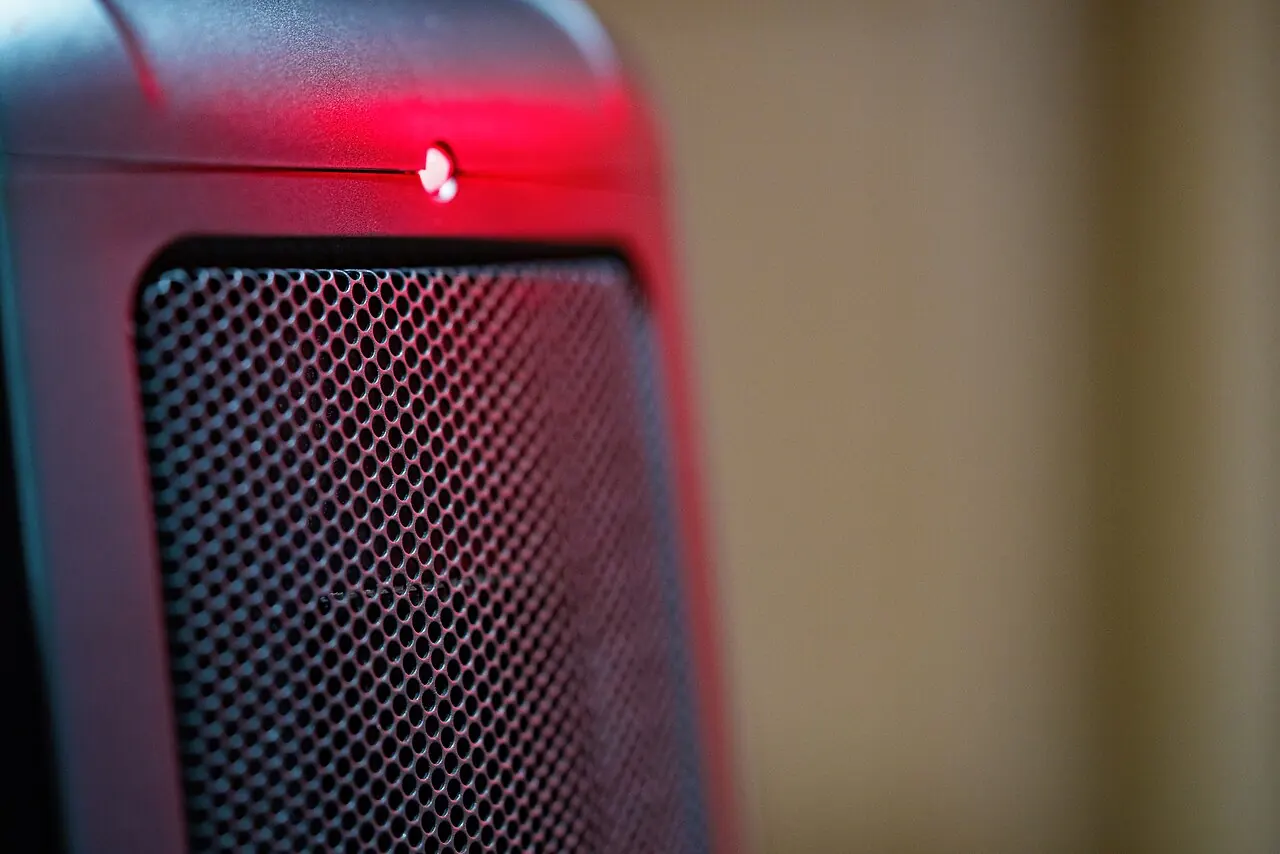
Photo: Tony Webster from Minneapolis, Minnesota, United States, CC BY 2.0. Cropped and resized for this article.