

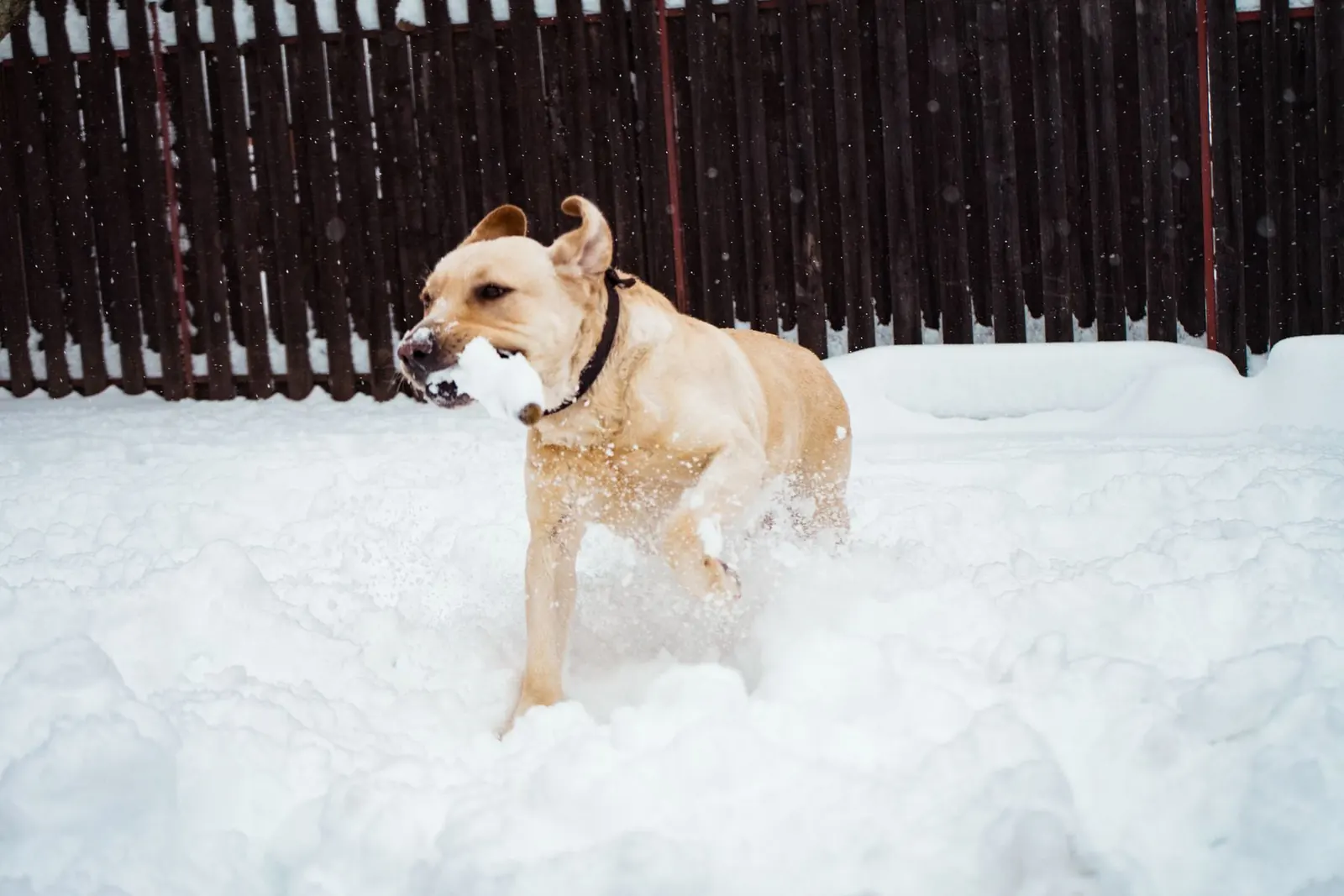
The usual loop has a problem in winter: its farthest point is still halfway home. If your dog starts lifting a paw beside the park, you cannot undo the distance already covered. A safer cold-weather walk often begins with a different route, one that passes near home and can end without a long return over the same icy pavement.
Winter dog walk safety is partly about cold, partly about footing, and partly about what clings to paws afterward. A dog can be comfortable in the air temperature but unhappy on a salted sidewalk. Another may have good traction and still need to go inside sooner. Treat those as separate reasons to change the outing.
Plan the walk around the dog you have today
Cold tolerance varies with age, size, coat, health, and conditioning. Cornell University's veterinary guidance notes that puppies, smaller dogs, older animals, and dogs with thin coats or certain health concerns can have more difficulty staying warm. A dog recently arriving from a warmer climate also needs different expectations from one accustomed to local winter conditions.
This is why a universal temperature chart cannot tell you that every dog may safely walk for a fixed number of minutes. Consider wind, wet snow or rain, the dog's condition, and the ability to return quickly. Ask your veterinarian about individual restrictions, particularly if mobility or an existing health problem already affects outdoor activity.
Make the first outing in changed weather an information-gathering trip, not a commitment to the usual mileage. Watch how the dog moves and whether they remain comfortable. Do not use yesterday's enthusiastic walk as proof that today's freezing rain, freshly treated sidewalk, or stronger wind is equivalent.
If someone else walks your dog, give them a concrete route and permission to shorten it. Tell them about any veterinarian-provided limits and where the cleaning supplies are kept. Avoid leaving an instruction such as a good long walk when the safe route may end at the first cleared patch.
Choose a short loop with good exits
Favor cleared paths, familiar entrances, and locations where you can turn around without crossing a busy road. Look at the route from the handler's perspective too. If you cannot walk securely while holding the leash, the route is unsuitable even if the dog appears willing to continue.
A shoveled toilet area near the door can reduce the distance required during the worst conditions. Keep access to it clear, including steps and the landing. In an apartment, factor the hallway, elevator, and building exit into the trip. The cold part is not the only place where a wet dog or handler can slip.
Use a regular leash that lets you maintain control without a dog suddenly accelerating far ahead. Keep identification current. Bring a light for seeing the surface, and use reflective items so drivers can see you both. A bright collar alone will not illuminate a patch of ice under your feet.
Stay off frozen ponds, lakes, and streams rather than judging their strength from appearance. Also avoid snowbanks at road edges, where footing and visibility may be poor. If the only cleared strip forces you into traffic or across a dangerously slick surface, change the plan instead of treating completion of the route as the goal.
Handle ice melt as an exposure you can reduce
A cleared sidewalk may still carry residue
Watch for granules at building entrances, concentrated piles near steps, and slushy runoff from treated pavement. Steer around these where you can do so without stepping into traffic or onto worse ice. Keep the dog's nose away from stored bags, spilled product, and unknown puddles. A quick sniff does not need to become a taste.
ASPCA Poison Control's ice melt guidance distinguishes incidental licking from eating a larger amount of product. A brief lick does not automatically mean a severe poisoning, but access to the bag or a concentrated spill is more concerning. The product, amount, and dog's condition matter; a label alone cannot settle an exposure question.
At home, use a product appropriate for households with pets and follow its application and storage instructions. Do not interpret pet-friendly as edible. Store the bag in a secured location and clean up spills so the dog cannot investigate them later. You control the amount applied to your own path more easily than what a neighboring property uses.
Ask what was applied when you need to know
If a shared walkway is repeatedly causing trouble, ask the property manager for the product name and a safe alternative route. A photograph of the label is more useful to a veterinarian than a description of blue pellets. Do not scatter a different chemical over the existing product or mix household ingredients to make an improvised deicer.
Suspected ingestion is a reason to contact a veterinarian or animal poison-control service promptly, especially if a meaningful amount may be missing or the dog is unwell. Keep the packaging or product photograph and note the approximate time. Do not wait for a particular symptom to prove which chemical was involved, and do not induce vomiting or give remedies on your own.
Fit protective gear before the difficult weather arrives
Cornell's winter safety guidance recommends considering a coat for a short-coated dog or one bothered by cold, and properly fitting boots for paw protection. Choose gear that allows ordinary walking and toileting without rubbing or slipping. A wet garment should not become the reason a short outing turns into a longer one while you keep adjusting it outside.
Introduce boots indoors during calm, brief sessions. Let the dog become familiar with wearing them before relying on them on a slippery sidewalk. Follow the manufacturer's fit instructions, and check that closures are secure without excessive pressure. A boot that twists or falls off needs attention; a set of boots is not useful simply because all four were on at the door.
On the first outside use, stay close enough to return if the fit or traction is poor. Check the paws after removal, and allow the boots to dry as directed before the next trip. If the dog cannot tolerate them, reduce exposure through route choice and shorter outings rather than forcing a prolonged struggle in cold weather.
Keep the return-home supplies together with your dog's emergency kit essentials: spare leash, clean towel, and current veterinary contacts. These items support an ordinary winter walk too. You do not need to carry a medical treatment kit to make a nearby toilet trip safer.
Turn back when the walk stops looking comfortable
Cornell identifies paw lifting, reluctance to walk, shivering, a hunched posture, and sudden anxious behavior as reasons to move a dog into a warm, dry place. These are observations to act on, not a diagnosis you must establish on the sidewalk. End the exposure rather than urging the dog to push through to the next corner.
A dog stopping repeatedly might have cold paws, packed snow, a gear problem, or another source of discomfort. If you can safely pause near shelter, look for an obvious issue without forcing painful handling. Do not dig into an injured paw, pull firmly attached ice from fur, or continue because you have decided the dog is merely being stubborn.
For suspected frostbite or hypothermia, contact a veterinarian immediately. Marked weakness, collapse, or breathing difficulty calls for emergency veterinary help. Contact a veterinarian if concerning signs continue after you return indoors. Do not rely on a coat, a warm room, or the dog's breed to rule out a problem.
Make paw cleaning part of coming through the door
Set a washable towel near the entrance before leaving. When you return, wipe or wash the feet, legs, and belly to remove salt, deicing chemicals, and packed snow, as Cornell recommends. Use a gentle approach and clean water or a damp cloth for routine residue, not household surface-cleaning wipes.
Check between toes and around pads without prying at sore areas. Look for persistent redness, cracks, bleeding, or a change in how the dog bears weight. Dry the paws and wet underside before the dog settles down. Put used towels where they will not be mistaken for clean ones and clean the floor where salty water has collected.
If a paw remains painful, the dog keeps licking, or limping continues, ask your veterinarian for advice rather than adding human creams or pain medicines. Routine cleaning prevents residue from remaining on the coat; it does not treat an injury or answer whether a chemical has already been swallowed.
Replace distance with a better winter routine
Consider an older dog in a building with a heavily salted front entrance. The workable outing may use a confirmed cleared side exit, a short toilet stop, and immediate paw cleaning. Adding boots is optional if they fit and are tolerated; moving the outing to another hazardous pavement simply to preserve the normal distance is not an improvement.
For an energetic dog that enjoys snow, enthusiasm can justify another short outing later if conditions remain suitable, but it does not override poor footing or cold discomfort. Between trips, use familiar indoor sniffing games, simple training, or appropriate food puzzles. Keep activity within the dog's usual abilities and veterinary advice rather than trying to replace every lost outdoor minute with strenuous indoor exercise.
If a storm also removes household heat or forces a move, the problem has grown beyond walk length. Use the pet power-outage plan to arrange a suitable indoor destination and transport. Before the next outing, put dry gear by the door and choose the shortest route that meets the dog's immediate needs.
Photo: Vlad Chetan, Pexels License. Cropped and resized for this article.


